Lateral epicondylalgia — commonly called tennis elbow — affects far more than tennis players. It is one of the most common upper limb complaints in working adults, and one of the most frequently mismanaged. Cortisone injections win at six weeks but show 72% recurrence rates at twelve months. Rest alone does not resolve the underlying tendon state. What the research consistently supports is progressive loading, starting with isometric holds and building through eccentric and isotonic resistance.
This program gives you that structure. It won't replace individual assessment — every elbow presentation is different, and some need clinical input first. But for people with a confirmed lateral epicondylalgia who want to understand the evidence and get started, this is the right foundation.
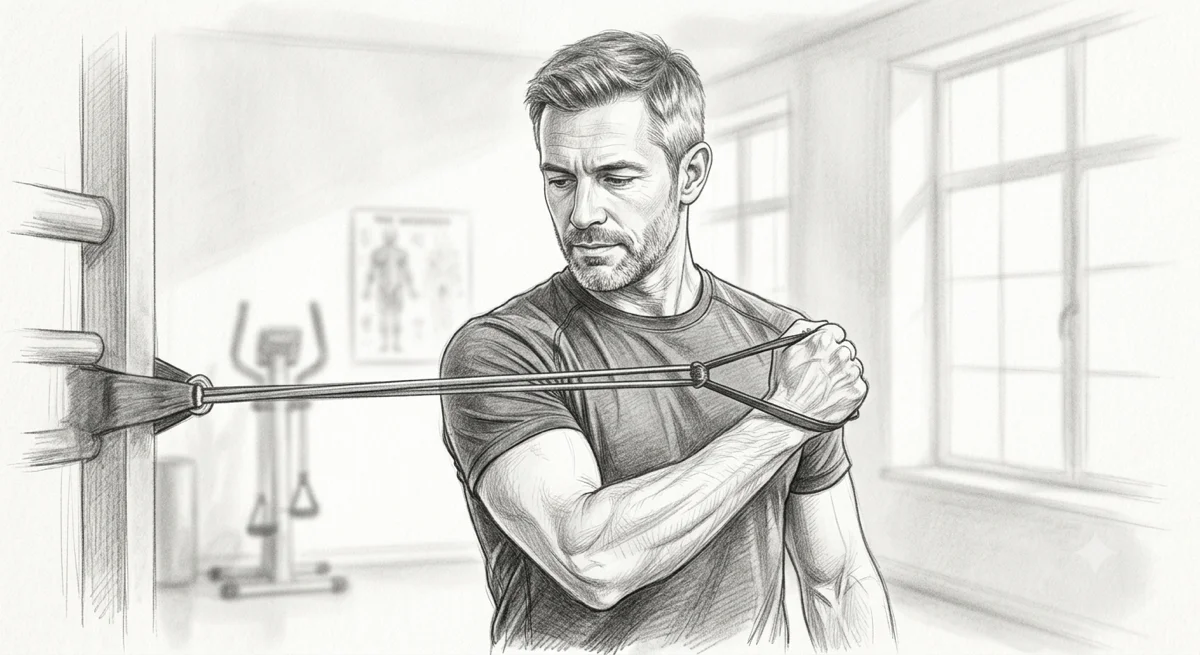
What the Program Covers
Who This Program Is For
This program is suited to people with a diagnosis of lateral epicondylalgia — or a strong clinical suspicion based on presentation (pain over the lateral epicondyle reproduced by gripping, wrist extension, or lifting with a pronated forearm). It is relevant across occupations and activities — trades workers, office workers, and racquet sport athletes all present with this condition.
It is not designed for people with acute elbow injuries, post-surgical elbows, radial tunnel syndrome, or cervical radiculopathy presenting into the elbow. If you are unsure of your diagnosis, an assessment before beginning is the right starting point.
What You Will Need
- A light dumbbell or water bottle (0.5–1 kg to start)
- A resistance band for proximal chain work
- A firm surface (table edge) for isometric holds
- Approximately 15–25 minutes, every second day for loading sessions
Please note: This program is for educational and self-management purposes only. Individual presentations vary — your assessment and management should be tailored specifically to you. If your symptoms are severe, worsening, or you are unsure of your diagnosis, please consult a registered health practitioner before beginning. Nothing in this program constitutes clinical advice for your individual situation.
Enrol — It’s Free
Enter your details below and we'll send you immediate access:
Already a patient or have a question? (03) 9787 0600 · Book Online